
Service Area
Preconstruction
Office
Buildings
Permitting
Delivery
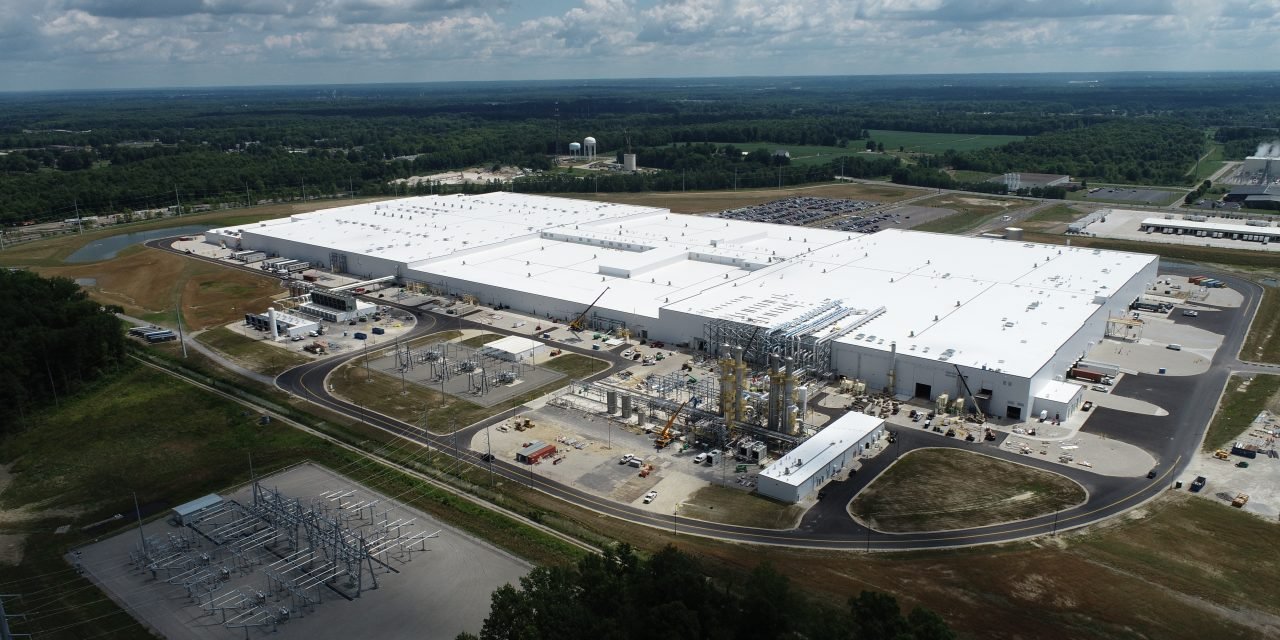
No vehicle or battery assembly plant has been announced in Edinburg, and we say so plainly because an owner studying the market should start from what is on the ground. What the city does have is a set of conditions that an automotive or electric vehicle manufacturer would test before anything else: large serviceable acreage, a federal highway that is still being completed, and a drainage record that every site engineer on the list will ask about. The Edinburg Economic Development Corporation describes South Texas International Airport at Edinburg as 1,080 acres along I-69C and U.S. 281 with 550 acres available for development, and that single figure frames how much plant a parcel in this part of Hidalgo County could carry.
An automotive plant is a different building from the warehouses and flex shops that now fill the northern Valley. Body, paint, battery and final assembly lines pull heavy power, process water, compressed air and exhaust from the first month of design, and the structure is shaped around conveyors and overhead handling long before an architect draws a wall. We build with that sequence in mind, and we document each decision the way a board or a state incentive office expects it documented.
Where our sources are silent we do not guess, and we recommend that every figure be confirmed with the city and the drainage district before it enters a pro forma. A plant of this size also shares utility and truck-route questions with a large warehouse, which is where many owners begin.
What the Edinburg market offers a vehicle manufacturer
The airport tract is the largest block of developable land the Edinburg Economic Development Corporation has described to us, and its published materials add a 5,000 foot runway planned for extension to 7,600 feet. Those figures come from pages hosted on a staging site, so an owner should confirm the current acreage and runway plan directly. Even so, the scale matters: final assembly, a battery hall and a supplier park consume several hundred acres once yards, detention and parking are laid out.
Road access is the second variable. Interstate 69C is concurrent with U.S. 281 along its whole length, and the reference record we have shows that, as of 2023, only an 18-mile segment starting at the southern terminus in Pharr had been completed. A trade-press report from October 2025 also describes a planned State Highway 68, a 22-mile corridor from I-69C and U.S. 281 in Edinburg to I-2, with no completion date or cost given. A plant planner has to treat both as a corridor in progress rather than a finished network when estimating inbound parts and outbound vehicle trucking. We discuss the airport area in more detail on its own page.
Permits, floodplain and process approvals
Edinburg's Building Safety Department handles plan review, permit issuance and inspections, and it operates an online self-service portal. The pages we reviewed do not state which edition of the International Building Code the city enforces, and Texas law sets the 2012 edition as the floor for municipal commercial construction while allowing cities to adopt later editions locally. We confirm the adopted edition and local amendments in writing at the start of every project. The Fire Marshal's office applies the International Fire Code, NFPA standards and the city's own fire chapter, which matters for paint booths, battery storage and flammable liquid rooms.
Flood regulation depends on where the parcel sits. Hidalgo County's floodplain order applies to unincorporated land and requires new nonresidential construction to have its lowest floor at or above the base flood level or to be floodproofed with an engineer's or architect's certification, with a Development Permit required. Air, wastewater and other environmental approvals tied to vehicle or battery production should be led by the owner's environmental counsel, and we hold the schedule float they require.
Foundations, slabs and structure under heavy lines
Assembly equipment is unforgiving about flatness and settlement. A body shop with robot cells and a paint shop with deep process pits need slab sections that are thickened, reinforced and jointed around the equipment layout, and the geotechnical report decides whether the building sits on shallow footings or on drilled piers. Our manufacturing facility construction practice sequences pits and trenches before the slab pour so that no saw cutting is needed afterward.
The building frame is typically structural steel with long spans and crane runways, with insulated metal wall panels in the production hall and heavier envelope sections where office and training space meet the plant. Roof loads for solar arrays, exhaust stacks and rooftop air handlers belong in the structural design from the start, because retrofitting them after steel release is one of the costliest changes in a plant.
Water, drainage and the site that must stay dry
A vehicle plant is a heavy user of process water and a producer of stormwater from very large roofs and truck yards. The National Weather Service recorded 9.78 inches of rain two miles north of Edinburg during Hurricane Hanna in July 2020, with 18 inches to as much as 4 feet of standing water from poor drainage in areas east of the city. Texas Public Radio reported in March 2025 that storms dropped more than half a year of rain on the Valley within 48 hours. A plant that cannot ship for a week after such an event has a cost the owner can calculate, so detention volume and floor elevation are design inputs.
Our site development and utilities work therefore starts with the outfall: where the water leaves the property, who owns the ditch, and what the drainage district will accept. We then size detention, grade the yards away from the docks and staging area, and bring power, gas and water to the pad in the order the line needs them.
What moves the budget on a plant of this type
Process equipment is usually owner-furnished, which means the contractor's price depends on the quality of the interface drawings. Power gear, transformers and large air systems carry long lead times, and we advise owners to release them early through our long-lead procurement process, with deposit and delivery dates written into the schedule.
The decisions that most often change the number are the extent of the pile or pier foundation, the amount of fill needed to raise the pad above flood levels, the size of the electrical service, and whether the building is phased. A first phase covering body and final assembly, with space reserved for battery or paint, brings operations forward but needs utilities and the truck court sized for the full plant.
Sequencing from site clearing to first vehicle
On a project of this scale the critical path runs through approvals, power, and equipment delivery rather than steel erection. We build the schedule backward from the date the owner needs the first line commissioned, and we show clearly which items are controlled by the contractor, which by the utility, and which by regulators. Mass grading and utilities can start while the building permit is under review, provided the site permits are in hand.
Commissioning is staged: utilities, then conveyors and robotics, then dry runs, then pilot builds. We give the owner's integrators access to completed areas on a defined turnover date. Plants serving the manufacturing sector benefit from one point of coordination during this period, and a fulfillment center for parts often shares the same site.
Test a plant site before capital is committed
Send us a parcel, a production program and your target start date. We will return a site and utility assessment, a phasing outline and a list of approvals that need early attention.
Questions Owners Ask
Is there an electric vehicle plant planned for Edinburg?
We found no announcement of a vehicle or battery plant in the sources available to us, and we do not suggest otherwise. What exists is land, with the airport tract described by the Edinburg Economic Development Corporation as 550 acres available for development. We help owners test whether a site and building can support a plant before they commit capital.
Could a plant on the airport tract rely on the new highway?
Only partly today. Interstate 69C follows U.S. 281, and a reference source reports that just an 18-mile segment from Pharr had been completed as of 2023. The planned State Highway 68 is described without a completion date. We advise owners to plan logistics around the roads that exist and treat the new corridors as upside.
Which building type is closest to what an assembly plant needs?
A manufacturing plant is the nearest relative, with heavy slabs, crane service and large utility loads, but vehicle lines add paint, battery and test requirements. The structure is similar, and the difference lies in the process systems and the sequencing of equipment installation.
What does flooding change about the design?
It changes the pad elevation, the detention volume and the location of electrical gear. Standing water of 18 inches to 4 feet was reported east of the city after Hurricane Hanna, so we design the plant so that production, shipping and power remain above those levels.
Can the plant be built in phases?
Yes, and phasing is common. We install utilities, drainage and the truck court for the whole plant, then build the first production hall so operations can begin while later halls are under construction. The phase line must be fenced and the fire access maintained.