
Service Area
Preconstruction
Office
Buildings
Permitting
Delivery
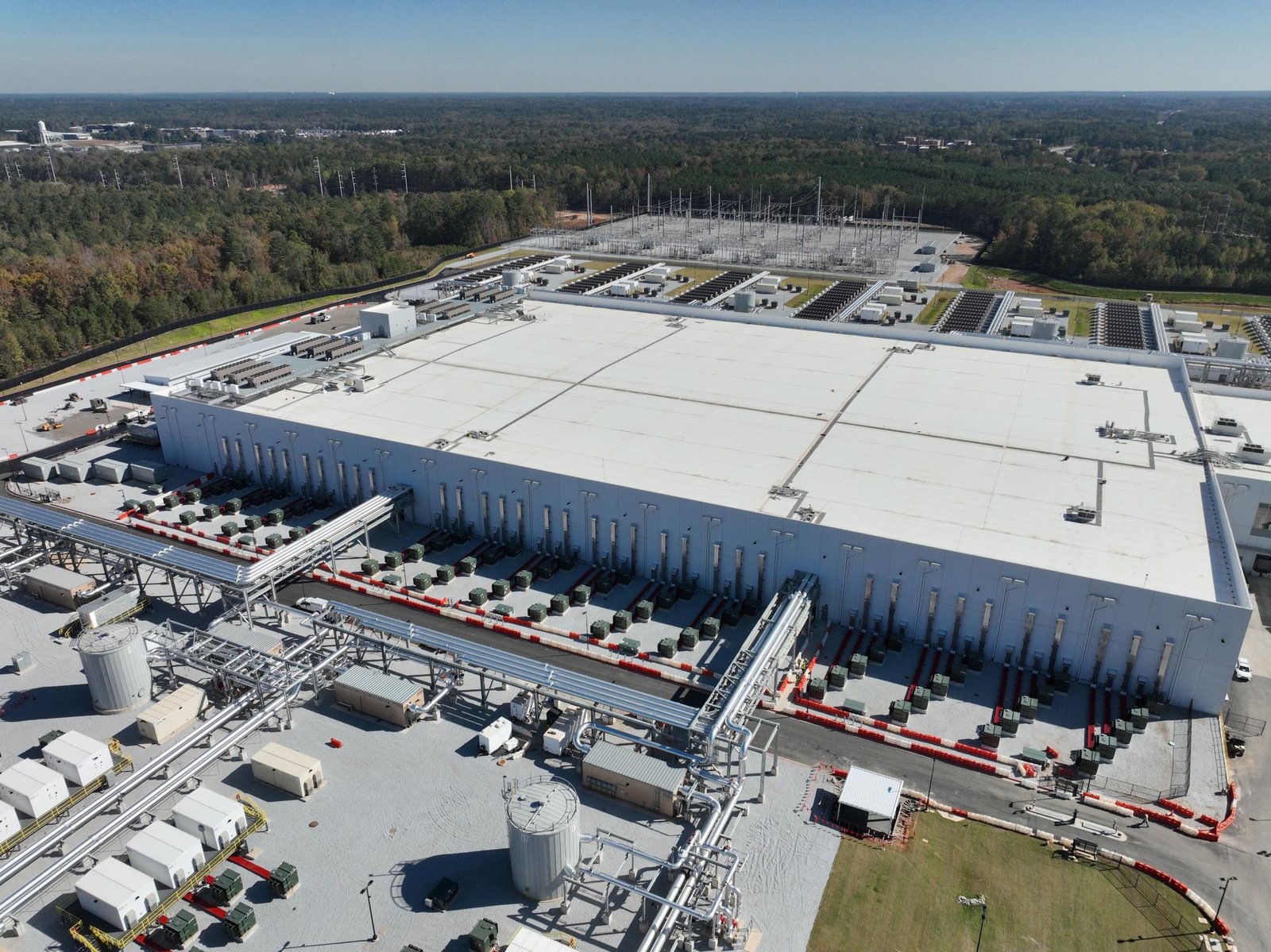
Uptime is a promise measured in power, cooling and water, and in the northern Valley it is also a promise measured in inches above the street. A data room or small data center in Edinburg will be judged by how long it stays online through a hot summer, a utility interruption and a storm that leaves water on the roads. Our task as the builder is to make the physical conditions for that promise true and to document that they are.
We do not describe Edinburg as a hyperscale market, and we do not build as though it were. The realistic projects here are enterprise and institutional facilities: a county or school district data hall, a university or medical campus computing room, a telecommunications or carrier facility, and the edge or colocation space that serves local business. Those projects are modest in size, perhaps a few thousand square feet of white space, but they have the same needs as larger ones for redundancy, security and orderly commissioning.
Owners who intend to colocate equipment in an office or hospital campus should also read about our healthcare system work, where computing rooms are common. The sections below describe the codes, the structure and the schedule risks as we see them from the contractor's side.
Review and flood rules that apply first
Because Texas has no single statewide commercial code enforced in every city, the first task is to confirm which building code edition the City of Edinburg applies and what local amendments exist. The Building Safety Department administers permits and inspections, and its Fire Marshal's office reviews fire protection under the International Fire Code and NFPA standards. Data rooms commonly use clean-agent or pre-action sprinkler systems, and the fire marshal will want to see how they are tested and how the room is purged.
For sites outside the city limits, the Hidalgo County floodplain regulations require a development permit and, for nonresidential buildings, a lowest floor at or above the base flood level or an engineer-certified floodproofed design. Because the equipment inside a data center is more valuable than the shell, we advise owners to treat the base flood level as a minimum and to raise the electrical and mechanical rooms above it.
Shell, power path and cooling plant
A data center is a power path surrounded by a building. The scope includes the utility service, switchgear, transfer equipment, generators with fuel storage, batteries or uninterruptible power equipment, distribution to racks, and a cooling plant that rejects heat to the outdoors. Each system requires a pad, a route, a clearance and a service path, so the site and the shell are laid out around equipment, not the reverse.
The shell is usually a reinforced concrete or tilt-wall envelope, discussed in our tilt-wall building page, with a roof designed for rooftop units or equipment platforms, and with few windows. Floors may be raised or slab on grade, with cable trays above. Our general approach to the category is set out in data center construction, and smaller computing spaces are sometimes placed inside an existing flex building instead of a new shell.
Where such facilities fit around Edinburg
South Texas International Airport at Edinburg is described by the Edinburg Economic Development Corporation as a 1,080 acre site along I-69C about nine miles north of downtown, with 550 acres available for development. The airport's economic development news page lists current and upcoming improvements totaling $24,722,224. Those materials appear on a staging copy of the corporation's website, so owners should confirm current availability, but they indicate that large parcels with highway frontage exist away from the dense parts of the city.
Institutional demand is also close at hand. The University of Texas Rio Grande Valley has its main campus in Edinburg, and the county seat houses Hidalgo County government, so campus and public-sector computing rooms are the most likely type of project. We describe the university district on our page for UTRGV Edinburg, and public owners are served through our work for government and public-sector clients.
Security, access and clean construction
A data center project has controls that an ordinary building does not. Access to the site is restricted, deliveries are logged and the work areas are kept clean, because dust in a completed room can damage equipment and trip detection systems. We enforce a clean-room protocol in the final stages, with sealed floors, filtered air and a changing area for trades.
Safety on the job also has an electrical dimension. Energizing switchgear, testing batteries and running generators require lockout and tagout procedures, arc-flash labeling and a written sequence agreed with the owner's operations staff. Every system gets a written test script, a witness and a signed result, and the owner keeps the record for insurers and auditors. We place commissioning agents on the owner's side of the table and ask them to review our test plans before the equipment arrives, so that the tests prove the performance the owner has bought.
Long-lead equipment sets the calendar
Switchgear, generators, transformers and chillers frequently arrive many months after they are ordered, and the building is sometimes the shortest item in the schedule. We therefore recommend that the owner approve the electrical one-line diagram early and allow us to coordinate orders through long-lead procurement. A building ready to receive equipment that has not shipped is an expensive way to wait.
Utility coordination is the other gating item. The electric provider's engineering, easements and service energization follow their own timetable, and we make written requests at the outset, then follow them at each owner meeting. Commissioning takes longer than most owners expect because each system is tested alone, then in combination, then under failure conditions. The process is described in commissioning and closeout, and we reserve weeks for it in the plan.
Start with power and flood height
Give us the load, the site and the uptime target. We will return a power path, a cooling concept, a flood-elevation recommendation and a commissioning outline.
Questions Owners Ask
Is Edinburg a realistic place for a data center?
For institutional, enterprise and edge facilities, yes. A university campus, a county government and a growing airport district all create demand for modest, reliable computing space. We do not present Edinburg as a site for very large facilities, and we advise owners accordingly.
How high above the street should critical equipment sit?
At least above the base flood level and, where the owner can afford it, above the highest water seen in recent storms. The region received more than half of a year's rain in 48 hours in March 2025, and we recommend the generator, switchgear and batteries be on raised pads.
Who handles the drainage district approvals?
The civil engineer submits the drainage plan and we coordinate the construction. For work near a district channel, the Hidalgo County Drainage District No. 1 has an interest, and KRGV reported in 2025 on a proposed $33 million project to widen about 15 miles of the North Main Drain to hold double what it can now, serving McAllen, Alton, part of Mission, Edinburg and part of Pharr. The project was proposed, not complete, and whether a given site benefits depends on its location and on the schedule of work.
Can a data room be built inside an existing building?
Often, if the floor can carry the load, the roof can hold the cooling equipment and the building can receive the power service. We perform a feasibility study before committing to the conversion, and compare it with a new shell on cost and schedule.