
Service Area
Preconstruction
Office
Buildings
Permitting
Delivery
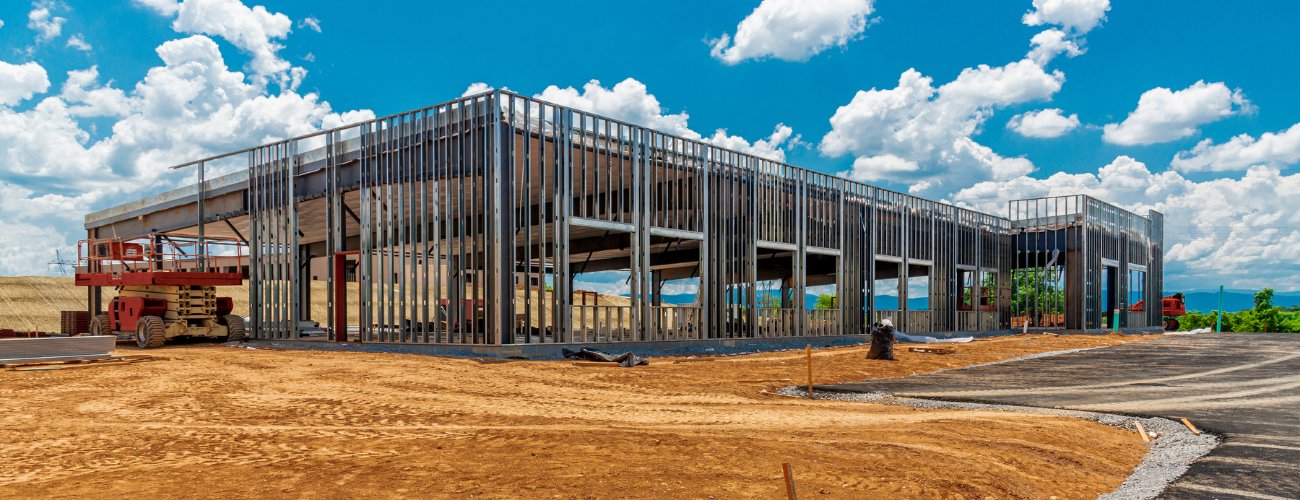
A county seat with more than 100,000 residents in the 2020 census, a U.S. Route 281 (I-69C) frontage along its east side and State Highways 107 and 336 running beside it, produces commercial work that almost always carries a public process somewhere in its history. A plat has been reviewed, a drainage question has been answered, a lender has set a draw schedule, or a school district or county office has a calendar the building must respect. We build commercial projects for owners in Edinburg and central Hidalgo County who expect that process to be documented as carefully as the structure itself.
The work covers a broad range. Some owners come to us for professional office buildings near the courthouse and campus districts, others for retail centers along the highway frontage, and others for a single-tenant building on a pad site where the schedule is driven by the tenant's opening date. What the projects share is an owner who will eventually have to explain the budget, the schedule and the permit history to someone else, and who wants a contractor whose records make that explanation short.
Industrial and flex space is part of the same market. The Edinburg Economic Development Corporation reported in October 2025 that it had sold land to six companies that intend to build nearly 400,000 square feet of industrial space over two years, which is why commercial real estate developers now ask us to price office, retail and warehouse components together.
Where Commercial Demand Is Forming Around Edinburg
Edinburg's growth is not concentrated in one district. Government and institutional employment sits near the courthouse and the university campus, retail and hospitality gather where the interstate frontage meets the cross streets, and industrial users are being drawn to land the economic development corporation has been selling for warehouse and light industrial use. The same October 2025 trade report describes a planned State Highway 68, a 22-mile corridor from I-69C and U.S. 281 in Edinburg to I-2, though it gives no completion date or cost, so we treat it as a long-range factor in site selection and not as something a schedule can depend on.
For an owner, this means that two commercial parcels a few miles apart can have very different approval paths, utility conditions and tenant expectations. We begin by establishing which jurisdiction governs the site, since land inside the city is reviewed by the City of Edinburg and land outside it falls under county floodplain rules, and we price the work against that specific path. A building that looks the same on the drawings can differ by several weeks and a meaningful sum depending on which path applies.
What Our Commercial Scope Includes
Our commercial scope begins with a site and feasibility review and carries through preconstruction, procurement, construction and closeout. On a typical ground-up building that means civil and utility coordination, foundations and slabs, structural framing in steel, masonry or concrete, envelope, roofing, and the interior build-out that the lease or the owner's program requires. We can deliver through a single design and build contract when the owner wants a single point of accountability, or as a construction manager at risk or general contractor when a design team is already engaged.
We distinguish between base building and tenant scope in the contract from the first day, because that line decides who carries cost risk when a tenant changes its mind late. Owners who are developing speculative space often want a warm shell with future-tenant allowances defined by square-foot rates, while owner-occupants usually want a complete turnkey building. Both approaches work, and the choice should be made in writing before pricing is final, so that the number an investment committee approves is the number that gets built.
Documentation That Survives a Board Packet
We have sat through enough bid openings and board meetings to know what an owner is asked afterward. Why did the price change between the schematic estimate and the guaranteed maximum price? Which allowances remain unspent? What did the building department require that was not shown in the design set? We keep a running log of each of those answers, dated and attributed, so that the owner's representative can answer without reconstructing events from email.
Our estimates separate quantities, unit costs, subcontractor scopes and contingencies, and we update them at each design milestone so a drift in cost is visible while the design can still absorb it. Subcontractor bids are leveled against a common scope sheet before an award is recommended. Where the owner is a public body or follows public procedures, we prepare the bid tabulations and qualification records in the form a procurement officer expects, including the paper trail for any alternates that were accepted or rejected.
Cost Drivers We See on Commercial Work Here
Texas Local Government Code Section 214.216, as amended by HB 738, makes the 2012 International Building Code the municipal commercial floor for agreements made on or after January 1, 2022, with cities free to adopt later editions by ordinance after a public hearing. The pages we reviewed for Edinburg do not state which edition applies locally, so we confirm it, along with any local amendments, with the Building Safety Department before the design is priced. An unconfirmed code edition is one of the quieter ways a budget moves.
The other large drivers are drainage and site work. A site that must detain stormwater, raise its finished floor or relocate an irrigation or drainage easement can carry costs that never appear in the building estimate. We also watch long-lead items such as switchgear, rooftop units and storefront systems, since a late release can hold up an otherwise ready building. Our cost narratives name these exposures and assign each one to an allowance, a contingency or an owner decision, so nothing sits unassigned.
Commercial Work Across Edinburg and Hidalgo County
Our home ground is Edinburg and the surrounding part of Hidalgo County, including the Trenton Road corridor where retail and hospitality sites are active, the university district and the airport area north of town. We also work in smaller communities such as Elsa, where county and municipal buildings and drainage conditions follow a different rhythm from the city's.
Because we are based here, we keep working relationships with the city departments, the county offices and the local trade base that a commercial schedule depends on. We can usually tell an owner within a first meeting whether a proposed site is likely to move through review quickly, and where the real uncertainty lies. When a project touches several jurisdictions or phases, our phased construction experience keeps occupied neighbors operating while the work proceeds.
Plan a Commercial Project With Us
Send us the site, the program and the date the building has to be useful, and we will return a written approach covering budget range, permit path and sequence. Call or use the request form to start the conversation.
Questions Owners Ask
How early should we bring in a contractor on a commercial building in Edinburg?
As early as the site is under contract or a design team is being selected. Early involvement lets us test the budget against the real site, confirm the permit path and flag long-lead equipment while changes are still inexpensive. We can provide a preconstruction estimate at schematic design, then refine it at design development and construction documents.
Does the building code edition differ between the city and the county?
It can. State law sets the 2012 International Building Code as the municipal commercial floor, and a city may adopt a later edition by ordinance. Unincorporated land is handled differently and is subject to the county floodplain order. We confirm the current edition and local amendments with the responsible department rather than assuming one for the whole county.
Can you build speculative shell space and finish tenants later?
Yes. We commonly deliver a warm shell with defined tenant allowances and then return for individual build-outs. The contract states what the shell includes, such as slab, demising walls, rough utilities and storefront, so that tenant improvement budgets are predictable and do not erode the base building.
What does a drainage requirement do to a commercial schedule?
It can add weeks if detention, an outfall connection or a floodplain development permit is involved, because the site work must be accepted before vertical construction can proceed in earnest. We sequence the earthwork and underground utilities first and run permit reviews in parallel with design wherever the jurisdiction allows it.
How do you handle owners who must follow public procurement rules?
We prepare qualification statements, bid tabulations and scope sheets in the form a procurement officer or board expects, and we keep the correspondence that explains each award recommendation. Owners tell us the value is in not having to rebuild the record when an auditor or a board member asks.