
Service Area
Preconstruction
Office
Buildings
Permitting
Delivery
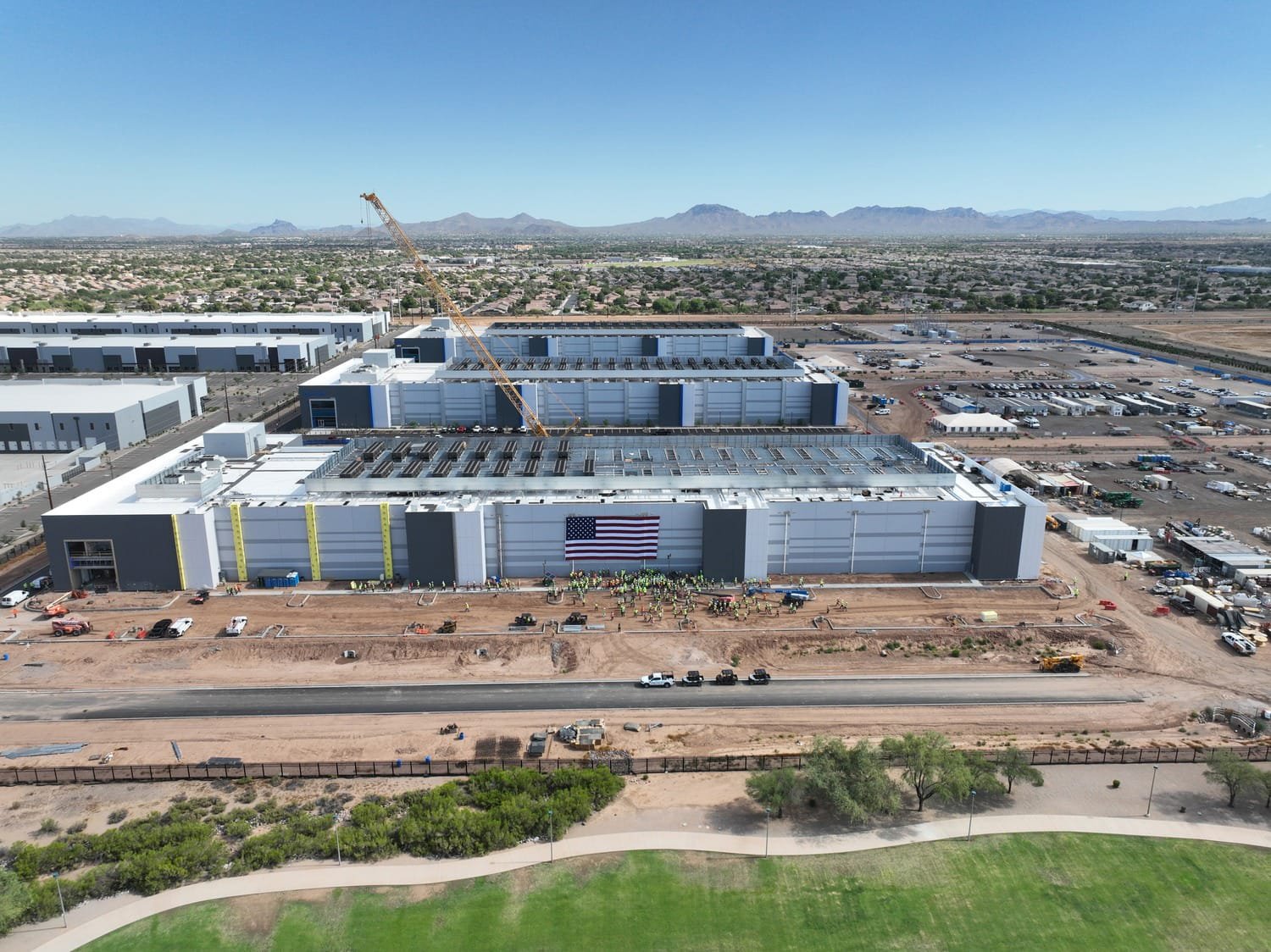
Six companies bought land from the Edinburg Economic Development Corporation and are expected to build nearly 400,000 square feet of industrial space over two years, according to an October 2025 trade report, and the same report says the corporation is working with developers on more than 600,000 square feet of speculative industrial space within three years. A developer reading those numbers sees a pipeline that is filling up, and also a field of competitors who will be bidding for the same subcontractors, the same steel and the same inspection slots. We build for commercial real estate developers who need that pipeline to turn into finished, leasable buildings on a date the lender will accept.
Our work for a developer starts well before a permit application. We price the pad, the utilities and the building shell against the pro forma, tell you early where a number has drifted, and keep a record of every decision that moves cost or schedule so your equity partners and lenders see the same story we do. In Edinburg and central Hidalgo County that conversation almost always includes drainage, because the county has seen enough standing water in recent storms that lenders and insurers ask about it before they ask about finishes.
A speculative building is judged on how quickly it can be leased, so we design the delivery around what a tenant will walk through: dock doors, clear height, parking counts, and a shell that accepts a build-out without being torn apart. If your project is an office, a retail strip or a flex building, the same discipline applies with different details.
Reading the Edinburg land and corridor market
The Trade & Industry Development report that describes the land sales also describes a planned State Highway 68, a 22-mile corridor from I-69C and U.S. 281 in Edinburg to I-2, with no completion date or cost given. For a developer that means the road is a reason to look at land, not a reason to underwrite a rent premium. We treat the highway as an upside case in the feasibility conversation and build the base case on what exists today: U.S. 281 through the east side of the city, with State Highways 107 and 336 feeding the grid, in a city of roughly 100,000 residents that is also the Hidalgo County seat.
North Industrial Park gives a more concrete reference point. An industry publication reported in July 2024 that a 200,000 square foot warehouse, built in two phases of 100,000 square feet, was planned there with an investment of up to $10 million. That source carries a medium confidence rating in our research, so we use it as an indication of how developers are phasing, not as a promise about what has been completed. Phasing a speculative building in halves is a sound way to match capital to leasing, and we plan site work and utilities so the second phase does not have to cut into the first.
Schedules a construction lender can fund against
Developers ask for a schedule that a lender will fund against, which means milestones that can be verified by an inspector or a title company rather than by our say-so. We lay out the sequence in the order lenders read it: site work and utilities complete, slab and foundation, shell dry-in, mechanical and electrical rough-in, then tenant-ready turnover. Each milestone ties to a draw package with the backup an inspector expects, and we keep the lien waivers current so a draw is never held up by paperwork.
The Texas Department of Licensing and Regulation lists a produce warehouse of 70,730 square feet in Edinburg, privately funded at $1,700,000, with a construction window from January to September 2026. A window of roughly eight months for a building of that size is a useful benchmark for a developer sketching a first-phase schedule. Wherever an owner needs long-lead items such as switchgear, overhead doors or dock equipment, we raise the order dates through our long-lead procurement process so the equipment is not the reason a certificate of occupancy slips.
Where a speculative budget moves
The line items that move a speculative budget in this market are rarely the glamorous ones. Detention capacity, fill and compaction, utility extensions, and paving under truck traffic usually decide whether a building pencils. Because the Valley sees heavy rain events, a site that sits in a low spot may need more fill and more drainage structure than the same building would on higher ground, and the cost difference should be known before the land closes, not after.
We give developers a base number and a set of alternates, so you can see what each choice does to the total. Slab thickness and joint spacing, dock apron concrete versus asphalt, clear height and column spacing, and the extent of the office build-out are the usual alternates. Our preconstruction estimating work is built around that kind of comparison, and it is the same estimate your lender's cost reviewer will test against the plans.
Code editions, city review and county floodplain rules
Texas does not enforce one commercial building code statewide. Local Government Code Sec. 214.216, as amended by HB 738, sets the International Building Code as it stood on May 1, 2012 as the municipal commercial floor, and cities may adopt later editions by ordinance after a public hearing. The Edinburg Building Safety Department handles plan review, permit issuance and inspections, and the pages we reviewed do not state the adopted edition, so we confirm the edition and any local amendments with the department before design is frozen rather than assuming a number.
Developers who buy outside the city limits face a different regime. Hidalgo County's floodplain regulations apply to unincorporated land under National Flood Insurance Program standards, require a Development Permit, and require new nonresidential construction to have its lowest floor at or above the base flood level or be floodproofed with an engineer's or architect's certification. We check the flood status of every parcel as part of due diligence and walk you through our permitting and entitlements process so the approval path is clear at the start.
Matching product to parcel
Most developers in Edinburg end up with a mix of product, and the site decides which one is feasible. A parcel near the airport suits a different building than a lot on the Trenton Road corridor, where retail and hospitality work is already under way. For the corridor we would point a retail owner toward our work for retail chains, and a developer holding a distribution site will find the logistics side explained on our page for logistics and distribution owners.
On the building side, the most common shells we price are warehouses and flex light industrial buildings, and we can carry either from pad preparation through tenant improvement under one contract if you prefer a single point of accountability. If you hold land in North Industrial Park, our notes on building in Edinburg North Industrial Park cover the specifics of that submarket.
Bring us the site before you close on it
Send us the parcel, the intended product and the lender's requirements, and we will return a preconstruction scope with drainage, utilities and phasing assumptions stated plainly. Design-build delivery is available if you want one contract from entitlement through turnover.
Questions Owners Ask
How much of a speculative building should be built before a tenant signs?
That depends on your lender and your leasing velocity, but phasing is the common answer in this market. Building the first half of a larger footprint, with utilities, paving and the second-phase pad prepared, lets you lease without carrying the full construction loan. We structure the site work so a second phase can start without disturbing the first tenant. We also price the shell and the tenant build-out separately so your leasing team can quote improvement allowances with confidence.
Does Edinburg have a published adopted building code edition we can design to?
Texas sets the 2012 International Building Code as the commercial floor for municipalities and allows cities to adopt later editions locally. The Edinburg pages we reviewed do not name the edition in force, so the right step is to ask the Building Safety Department directly and get the answer in writing. We do that during preconstruction, before drawings are issued for permit, so your design team is not forced to revise sheets late.
What should a developer ask about flood risk before buying a parcel?
Ask whether the parcel is inside the city or in unincorporated Hidalgo County, because county floodplain rules apply only to the unincorporated land. Then ask for the base flood elevation, any Development Permit requirement, and the detention approach the drainage district expects. Recent storm reporting shows standing water in parts of the Edinburg area, so we recommend a drainage review as part of land due diligence.
Can you help with a site that is also being marketed to build-to-suit tenants?
Yes. Build-to-suit tenants usually bring their own prototype and schedule, so we set up the project as a design-build or construction-management-at-risk delivery and keep the base building flexible. We keep two sets of numbers, one for the speculative shell and one for the tenant-specific upgrades, so a lease negotiation does not reopen the entire budget.
How do you keep a lender comfortable on a draw schedule?
We build the schedule of values from the same milestones the lender inspects, supply stored-materials documentation when steel or gear is purchased early, and keep waivers and pay applications consistent. Draws that arrive complete and on time are the simplest way to avoid friction with a construction lender.