
Service Area
Preconstruction
Office
Buildings
Permitting
Delivery
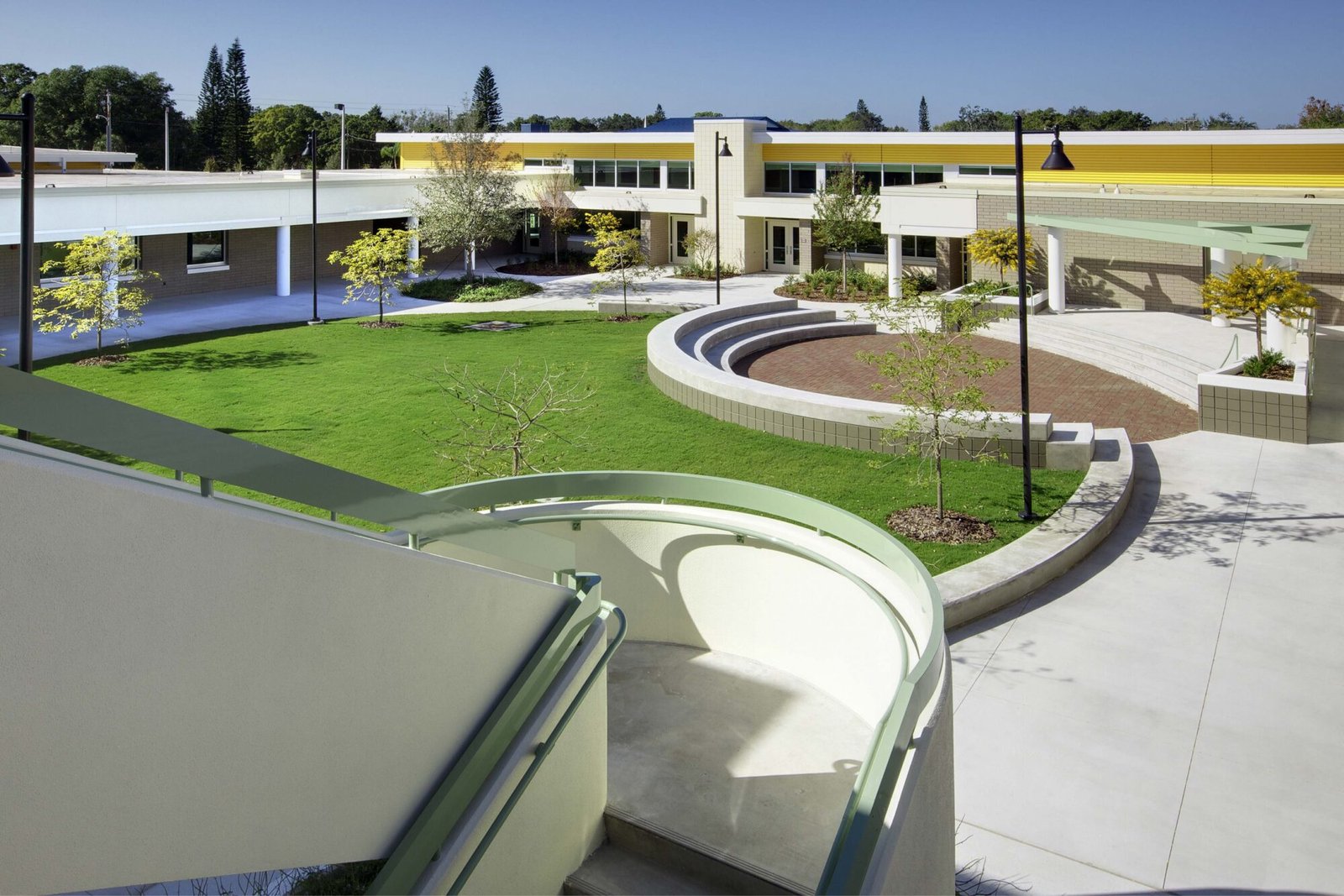
Classroom buildings are commissioned on a calendar that no contractor can move: the first day of the semester, or the first day of school. A lab that is finished three weeks late means three weeks of displaced classes, rented temporary space and faculty who cannot start research, which is why education owners ask for a different kind of schedule from the one a commercial developer might accept. We build for school districts, colleges and universities in Edinburg and central Hidalgo County, and we treat the academic calendar as the controlling constraint from the first meeting.
Our education work includes new classroom and laboratory buildings, additions to existing campuses, renovations of occupied schools during summer breaks, gymnasiums and fine arts spaces, and the site, parking and utility work that supports them. These projects are usually public or publicly financed, and they follow procurement procedures that we know how to document.
Edinburg is a good place to understand why. The University of Texas Rio Grande Valley, created in 2013, has its main campus here, and most of its athletic facilities are in the city, so the public and institutional building programs around it are large and continuous.
A University Town With Continuing Capital Needs
The UTRGV main campus in Edinburg generates a steady demand for academic, research, student-life and athletic space. In 2018, Texas Border Business reported that the University of Texas System Board of Regents considered a $12.2 million Classroom and Office Building for the School of Medicine's Edinburg campus, extending the 88,260 gross square foot Medical Education Building, with construction projected to run from September 2018 to November 2019. The same campus is now associated with a planned $160 million biomedical research facility, according to a 2026 report that gave no timetable.
Beyond the university, public school districts and other institutions in Hidalgo County plan buildings on bond, appropriation and grant cycles. We do not claim to predict the timing of any particular bond or capital program, but we do keep our estimating current so that a district or institution that decides to build can obtain a defensible number in days and not weeks.
Building Around the Academic Calendar
A summer renovation window is typically ten to twelve weeks, from the last day of classes to the day teachers return. Every task in that window has to be sequenced to the day: demolition, rough-ins, ceilings, flooring, furniture and the final cleaning and inspection. We build a detailed schedule backward from the first day of school, order materials in the winter and spring, and hold a buffer for the items that most often arrive late, such as doors, hardware, casework and electrical gear.
New buildings follow a different rhythm. The structure and envelope proceed through the school year, and the interior and commissioning phases are timed to a handover several weeks before occupancy, so that teachers and technology staff can move in and test their rooms. We publish a milestone schedule that includes those handover dates and the owner decisions needed to meet them.
Procurement the Board Can Defend
Public education projects are delivered through competitive procedures that vary by owner and delivery method. We support owners who use construction manager at risk, competitive sealed proposals or lump-sum bidding, and we prepare scope sheets, bidder qualification criteria and tabulations in a form that board members and procurement officers can follow. When a project is bid in packages, we coordinate the interfaces between packages in writing so that the gaps are identified before award.
We keep a decision log from preconstruction through closeout. When a trustee or regent asks why a classroom wing is taking an additional month, or why an alternate was accepted, the answer is a dated entry and not a memory. Owners with a municipal or county partnership on a joint-use building benefit from the same discipline.
Review by Several Authorities
Educational buildings are reviewed by the City of Edinburg Building Safety Department for permits and inspections where applicable, by its Fire Marshal, and by the state under the 2012 Texas Accessibility Standards when a project costs $50,000 or more. The pages we reviewed do not state the International Building Code edition adopted in Edinburg, so we confirm it, together with local amendments, during preconstruction.
Schools and universities often have additional requirements of their own, such as security design standards, technology infrastructure specifications and furniture and equipment schedules. We obtain the owner's design standards at the start of preconstruction and compare them with the drawings, so conflicts are resolved before bidding and not in the field.
Institutions We Build For
Our education clients are primarily education institutions of several kinds: independent school districts, charter operators, colleges and university systems. Each has a different governance structure, and we adapt our reporting accordingly, sending monthly reports to a board packet for one owner and weekly coordination notes to a facilities director for another.
Many of these owners are also part of the broader public sector, with budgets tied to bond elections, state appropriations or grants. We help them prepare cost information for those decisions, including conceptual estimates that are suitable for a bond program. For projects that include student housing, we coordinate the residential requirements with the academic building schedule.
Working Near Students and Staff
The most important rule on an occupied campus is separation. We fence the work area, control the access routes, schedule deliveries when students are not circulating and keep pedestrian paths clear and visible. Every worker on a school site is oriented on the campus rules before starting work, and our supervisors maintain daily contact with the principal, facilities director or campus police as the owner prefers.
Fire safety, hot work, utility shutdowns and the protection of existing life-safety systems are discussed and documented with the owner in advance. For students and staff, the best outcome is that the construction is barely noticed, and our planning aims for that result. Our school building experience informs the details.
Plan a Campus or School Project
Tell us the semester or school date the building has to be ready for. We will build the schedule backward from it and show what decisions are needed, and when, to meet it.
Questions Owners Ask
Can a school be renovated entirely in one summer?
Many renovations of a wing or a set of classrooms can be, if materials are ordered early and the permits are in hand before school ends. Whole-campus projects usually take two or more summers. We analyze the scope against the available weeks and tell the owner what can realistically be finished.
How do you handle a university research laboratory?
Laboratories need special ventilation, casework, plumbing for lab waste and sometimes vibration control or clean power. We work with the owner's researchers and the engineer to define those requirements, then sequence the specialty trades and commissioning so the laboratory can be used at the start of the term.
What delivery method works best for public education projects?
There is no universal answer. Construction manager at risk works well for complex or phased campuses, and competitive bidding suits well-defined buildings. We explain the tradeoffs and support whichever method the owner's counsel and board select.
How do you keep the owner informed between board meetings?
We provide a regular written report with cost, schedule, change and risk information, and we are available for briefings with the facilities staff. The decision log and photographs give officials a clear basis for their own reports.