
Service Area
Preconstruction
Office
Buildings
Permitting
Delivery
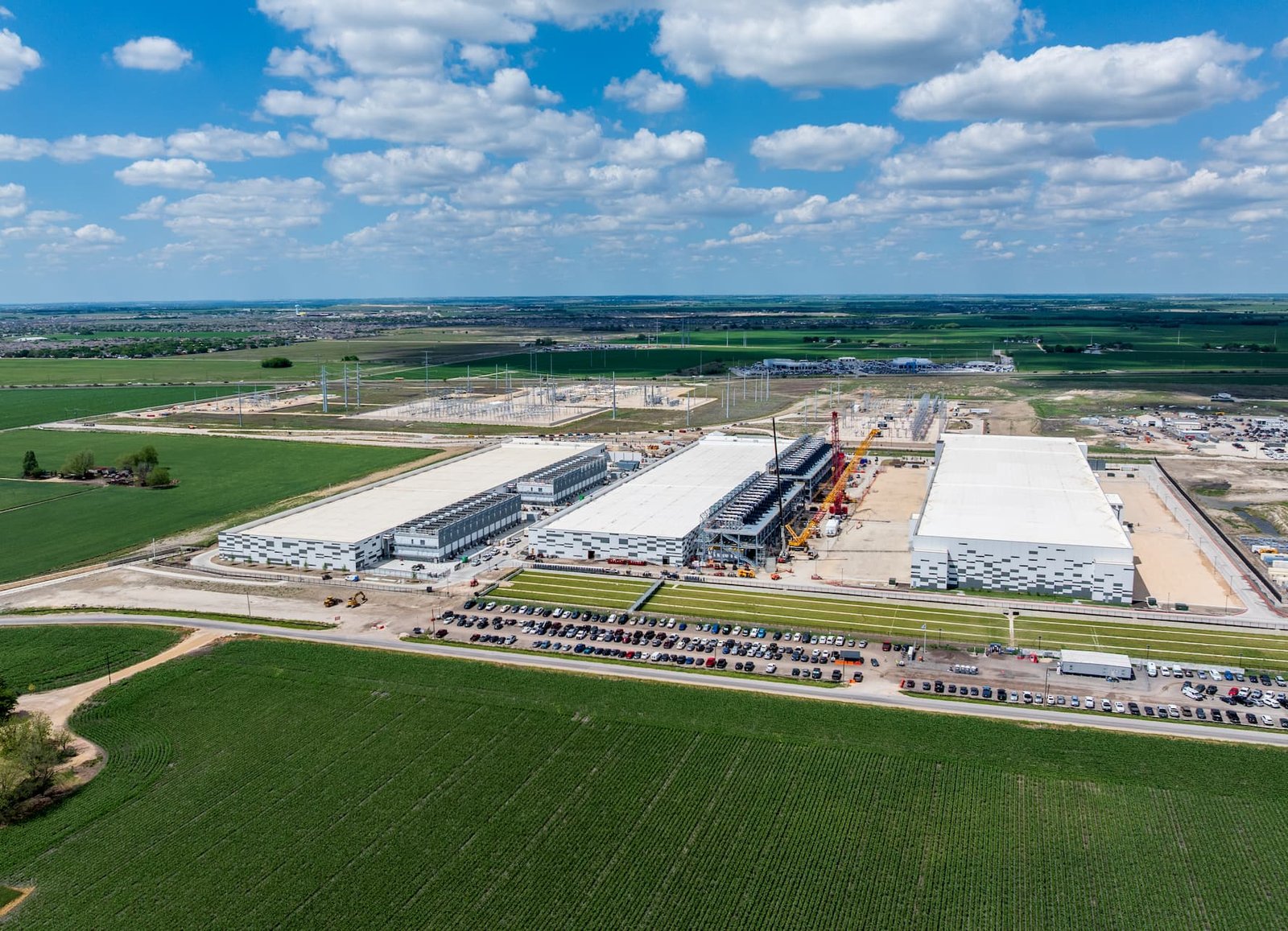
The first question for a data center is how much electrical capacity can be delivered to the site and when, and the building is a secondary answer to that question. A hall of racks may occupy less floor area than a distribution warehouse, yet it concentrates power, cooling and fire protection into a few rooms that decide whether the facility can operate. We approach a data center in the northern Valley as a utility project that happens to include a building, and we begin by reading the utility's capacity letter rather than the architect's floor plan.
Edinburg offers owners some reasons to look. South Texas International Airport at Edinburg occupies 1,080 acres along Interstate 69C and U.S. 281 about nine miles north of downtown, and the Edinburg Economic Development Corporation describes 550 acres of it as available for development. Large, open parcels with highway access are scarce in many metropolitan areas, and the airport district shows how land of that scale can still be found here.
We do not claim a record of data center work in this market. What we offer is disciplined general contracting for a building type that rewards early planning, careful commissioning and honest documentation.
Review and standards that shape the design
Texas law sets the 2012 International Building Code as the commercial floor for municipalities and allows cities to adopt later editions locally, so the governing edition has to be confirmed with the jurisdiction. The City of Edinburg describes its Building Safety Department as responsible for plan review, permits and inspections, and its Fire Marshal applies the International Fire Code and NFPA standards. A data center brings clean-agent or pre-action suppression, battery rooms and generator fuel storage before the fire official, and we raise these items in a pre-application meeting.
Projects of $50,000 or more also require registration with the state under the Texas Accessibility Standards. The requirement is routine, but it appears on the permit checklist and costs time if it is discovered late.
Site selection, water and weather
A data center on the Valley's flat terrain depends on surface drainage, because water that reaches generators, switchgear or fuel tanks becomes a reliability risk long before it reaches the floor. Texas Public Radio reported in March 2025 that storms dropped more than half a year's rain on the region within 48 hours, with water lingering across Edinburg afterward. We design the pad elevations, the yard drainage and the equipment plinths so that critical gear sits well above the water we have seen the area produce.
We also study the route of incoming fiber and power, because both usually cross land the owner does not control. Easements, crossings of drainage ditches and utility relocation can add months, and we map them in the first weeks of the project.
Heat and humidity are the other regional conditions. Cooling plant sizing, the placement of outdoor condensers and the protection of intake air from dust and salt-laden moisture all depend on a realistic reading of the local climate, and we ask the mechanical engineer to document the design conditions so the owner can see what the plant was sized for.
What we build and what we coordinate
We build the shell, the structure that carries heavy roof-mounted or ground-mounted cooling equipment, the slab with its cable pathways, the generator and switchgear yards and the security envelope. Owners usually procure the servers, and the electrical and mechanical packages come from specialists we coordinate. Our responsibility is to ensure that each package arrives in a building ready to receive it.
The structural system can be tilt-wall concrete, which offers mass, a fire rating and a quiet, secure envelope, or a steel frame with insulated panels when speed matters. We compare both in preconstruction and show how roof loads, equipment pads and future halls change the answer.
What moves the number
Electrical gear dominates a data center budget, and the schedule risks that matter most are switchgear, transformers and generators with long lead times. We encourage owners to authorize procurement before the construction contract is complete and to hold alternates for equipment that may not arrive when promised. Our preconstruction estimating process tracks these items separately from the building cost.
Cooling approach, redundancy level and the planned density of racks also move cost sharply. A design that leaves space for a second hall, with conduit stubbed and pads poured, usually costs far less than a retrofit, and we price both options so that the owner chooses with information.
Owners who commission this building type
Interest in this type of facility comes from private operators, healthcare systems that need resilient computing, universities and public agencies. The University of Texas Rio Grande Valley has its main campus in Edinburg, and a report in April 2026 described a planned $160 million biomedical research facility with no timetable given, which suggests the research computing demand an institution of that kind creates. We treat it as context only, with no assertion that any project is planned.
Our work for healthcare systems and education institutions has taught us how those owners handle approvals, and we bring that discipline to any owner who must justify a facility to a board.
Start with the utility letter
Send us a parcel and a target capacity and we will explain what the building, the utility and the review process will require. Owners considering the airport district can read about South Texas International Airport at Edinburg, and those weighing other industrial uses can compare flex and light industrial construction.
Questions Owners Ask
Is the Valley a realistic location for a data center?
It can be for the right operator. The region offers large parcels, highway access and, near the airport, land marketed for industrial development. The decisive issues are power delivery, fiber diversity and flood exposure, and we help an owner test each one before buying land.
How long does a data center take from permit to commissioning?
It depends on equipment lead times as much as on construction. A shell can be dried in within months, but switchgear and generators may arrive later, and commissioning involves load-bank testing and integrated systems tests that take weeks. We build a schedule around the longest lead item and show which dates the owner controls.
What does commissioning involve?
It includes factory and site testing of electrical and mechanical equipment, functional testing of each system, and integrated tests that simulate utility failure. We coordinate the commissioning agent, record the results and turn the documentation over at closeout in a form the owner can use for operations.
Who is responsible for the grid connection?
The utility provider owns the interconnection, and the owner usually pays for the facilities needed to serve the load. We help prepare the load letter, schedule the utility work alongside the building, and identify the points at which a delay by the provider would hold up energization. Owners should treat the utility timeline as a separate critical path from the building.
Does the airport district matter for a data center?
The airport district offers acreage and highway access, and a report from the economic development corporation shows $24,722,224 in current and planned airport improvements. That investment suggests continuing public attention to infrastructure there, though we advise owners to confirm utility capacity directly with the providers.