
Service Area
Preconstruction
Office
Buildings
Permitting
Delivery
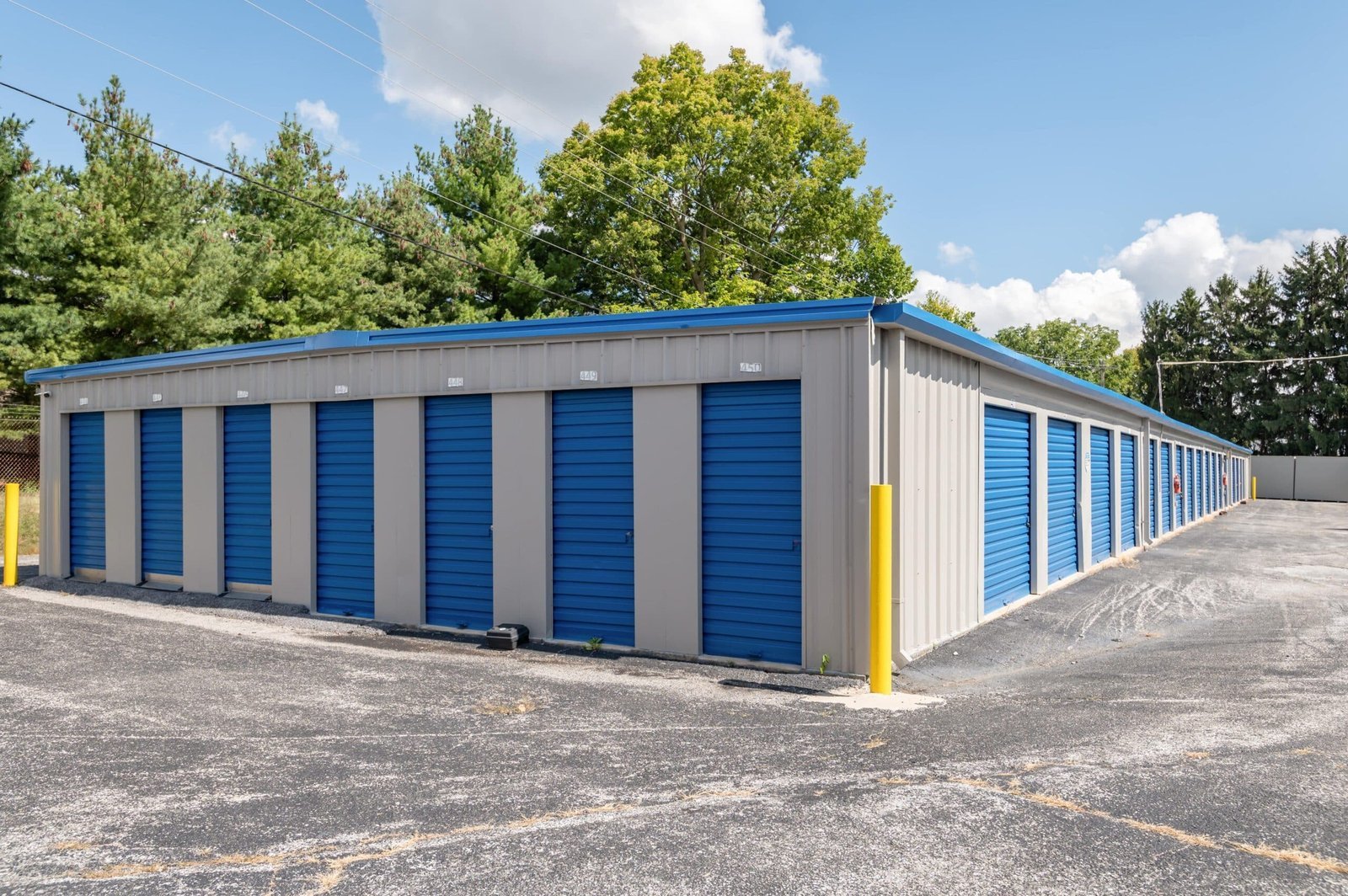
Rows of roll-up doors on a graded pad look like the simplest commercial building there is, which is why owners tend to underestimate what lies under them. A self-storage facility is mostly a drainage problem and a paving problem with a metal building on top. On flat Hidalgo County land the water has nowhere to go but the ditch, and the ditch is run by a district with its own rules. We start every storage project with the outfall and let the unit mix follow.
Edinburg and its neighbors give an owner two kinds of sites. Inside the city there are infill and highway-frontage parcels that need approvals from the Building Safety Department and, if the lot is large, a drainage review. East of town, in places like Elsa on State Highway 107 and FM 88, land can be less expensive for the same facility, though utilities and flood exposure need closer attention. Elsa had 5,668 residents in the 2020 census and sits about 11 miles east of Edinburg, a distance that suits a facility serving both communities.
The rest of this page describes the building types we build for storage owners, the approvals we expect, and the cost decisions that make a facility pencil out or not. We write for the developer who has a site under contract and the manager who will operate it for years.
Why storage sites in the northern Valley turn on drainage
Storm records explain the concern. The National Weather Service reported 18 inches to up to 4 feet of standing water where drainage was poor after Hurricane Hanna in July 2020, including areas east of Edinburg, and Texas Public Radio said in March 2025 that storms dropped more than half a year of rain on the Valley within 48 hours. A tenant who cannot reach a unit or finds water inside it will leave, and a storage owner cannot move the building after the fact.
The drainage district has been investing in channels. A Texas Border Business report of October 2025 said Hidalgo County Drainage District No. 1 has completed over 330 miles of drainage improvements and added 656 acres of detention capacity, and the 2023 bond information sheet lists improvements to Ditches 1.9, 2 and 4a serving La Villa, Edcouch and Elsa at $23,010,000 for about 4.3 miles of channel. Those are district projects and do not remove the owner's obligation to detain on site, but they affect which parcels have an adequate outfall. Our stormwater and drainage team reads those plans before a purchase closes.
Designing the unit mix and the buildings
Most facilities combine drive-up single-story buildings with a smaller number of climate-controlled units. Drive-up rows are economical: a slab, a pre-engineered steel frame, wall panels and roll-up doors. Climate-controlled space adds insulation, a mechanical system and interior corridors, and it commands higher rents in a hot climate. We price both and let the owner choose a ratio, often building the drive-up rows first and holding ground for a conditioned building.
Our pre-engineered metal building work gives us control over bay widths, door heights and clear spans. We ask the owner for a unit schedule early, because 5 by 10, 10 by 10, 10 by 20 and larger units require different column spacing and door counts. An office and manager's unit with restrooms, security cameras and gate access are the other main items, and the electrical and data layout should be planned before the slab is poured.
Where the money goes
On a storage project the building is often less than half the story. Grading, fill, paving, drainage structures, fencing, lighting and the access gate may exceed the cost of the steel. In flood-prone areas, the Hidalgo County floodplain order requires new nonresidential construction in unincorporated areas to have its lowest floor at or above the base flood level or to be floodproofed with certification, which can mean importing fill across the whole pad.
The second driver is the sequence. Storage developers sell units as they are completed, so a phased build with the first rows ready in a few months produces income sooner. That means the full-site paving, utilities and detention must be done ahead of the later buildings, and the owner needs to accept that early costs include work that serves later phases. A property management firm that will operate the site can help define security, lighting and access requirements before the design is frozen.
Approvals in the city and the county
Within Edinburg, the Building Safety Department handles plan review, permits and inspections through an online portal, and the Fire Marshal applies the International Fire Code with NFPA standards. The pages we reviewed do not state the building code edition, and Texas sets the 2012 International Building Code as the municipal floor, so we confirm the current rule and any local amendments. Fire access lanes around buildings and the width of drive aisles are common comments on storage plans.
Outside a city, the county floodplain order applies. It requires a Development Permit, and a copy posted in the Commissioners Court agenda packet leaves the adoption date blank, so we confirm the current version with the county before we rely on its freeboard terms. If your site lies in Elsa or its extraterritorial area, the city and the county can both have a role, and we identify who permits what before purchase. Accessibility rules apply to the office and to common routes, and projects of $50,000 or more must be registered with the state.
Sites from Edinburg to Elsa
Highway frontage near the I-69C and U.S. 281 corridor gives visibility, but it costs more and brings stricter driveway rules. Sites to the east and north, including land near Elsa, can be less expensive and are often served by farm-to-market roads that must be examined for turn lanes and truck movements. Storage owners also consider the nearby flex light industrial format when a lot is large enough to support units for contractors, who rent larger bays with power and a work area.
A comparison with a conventional warehouse is useful. Both use metal or tilt-wall structures, but storage buildings are narrower, have many more doors and need security systems. The self-storage construction work we do begins with a site review that checks access, utilities, floodplain status and the outfall, and it ends with a written scope and budget the lender can use.
Test your storage site before you close
Send us the parcel, the unit schedule you have in mind and your preferred opening date. We will review drainage, floodplain and utilities and return a phased budget.
Questions Owners Ask
Do I need to raise the pad above the floodplain?
In unincorporated Hidalgo County, the floodplain order calls for the lowest floor of new nonresidential construction to be at or above the base flood level or floodproofed with an engineer's or architect's certification. Inside a city, local rules apply. We review the flood maps and the city or county requirement before you make an offer.
Is it better to build drive-up or climate-controlled units?
Drive-up units cost less and are quicker to build, while climate-controlled space earns higher rents in a hot market. Many owners build drive-up rows first and add a conditioned building later. We price both so the decision rests on numbers.
How long does a first phase take?
Site work, drainage and the first slab and metal buildings can be delivered in a few months once permits are issued, though the weather and the district's review affect it. We provide a schedule that shows when the first units can be rented.
What is the value of building near Elsa rather than in Edinburg?
Elsa is about 11 miles east of Edinburg on State Highway 107 and FM 88. Land cost is the usual draw, and a facility there can serve a smaller community. The drawbacks are utilities, flood exposure and drainage, which we check before an owner commits.
Can the buildings be expanded?
Yes, if the first phase reserves land, sizes the detention pond for the whole site and places utilities along the future building lines. Expansion is cheaper when the fence, the gate and the paving are designed once.